

AEROBODIES
Health, Wellness & Process Improvement Solutions
For Corporations & Government Agencies Worldwide
Providing Health & Wellness Services Since 1997
11 million lives impacted and counting
About Aerobodies
Since 1997, Aerobodies has provided federal and state agencies and private industry companies with a wide range of health, wellness and program management services. Aerobodies’ goal is to consistently demonstrate quantifiable program results, achieve positive business outcomes and provide our customers with measurable impact that improves business and operational efficiencies.


The Performance Reset Diagnostic
Discover where your body, mind, and performance are quietly losing ground – and get a personalized roadmap to reclaim your energy, clarity, and capacity. Get your roadmap now.

Workplace Design &
Sustainability Solutions
Optimize your building with modern equipment, excellent lighting, and innovative workspace solutions that promote collaboration, individual contribution & creativity.
It can be difficult to keep employees and customers happy when you’re running a rapidly evolving organization with thousands of people & moving parts.
If turnover is outrageous, healthcare costs are through the roof and employee anxiety and stress is at an all-time high, you’re not alone. Add inefficient processes to the mix and a workspace that fails to inspire and motivate people, and you’re looking at a recipe for failure.
That’s where we come in. Since 1997 we’ve been creating health, wellness and process improvement solutions that solve the day-to-day problems you have with your people, processes and place. Strengthening your organization has never been so simple.
Health Management Services
Looking to innovate an outdated-legacy health program with a digital footprint? Need to transform your employee wellness program to support a virtual workforce?
Aerobodies has health and wellness solutions to fit any size business:


Business Process Improvement & Support Services
By optimizing your business processes, you can improve productivity, reduce costs, and enhance customer satisfaction. Don’t let your competitors outpace you.
Custom Solutions for Businesses in Diverse Industries


Contract Vehicles
Aerobodies offers a diverse suite of government and agency-wide contract vehicles for federal government customers.


It Shouldn’t Be So Hard To Get The Exceptional Health, Wellness & Process Improvement Solutions You Need.
That’s why we created Aerobodies. Because when you’re running a company with thousands of employees in the midst of the Great Resignation, you need to do everything possible to retain your talent, ensure the data your company needs is always just one click away, and offer wellness programs that contribute to employee satisfaction, health and performance.
Trusted by Government Agencies & Corporations Worldwide


“Our KPIs have surged! Our managers are actually talking to one another, initiating communication and process improvement programs.”
— Sherena, Sr. Manager, Washington, D.C.

If you would like to be considered for a spotlight interview on The Optimized Workplace Podcast, please contact Courtney at courtneyf@aerobodies.com. View our podcast FAQ.
The Optimized Workplace
Learn how we utilize this signature program to transform your workspace with a combination of services that encourage a thriving workforce! New topics are discussed weekly on our podcast.
Listen to the podcast:
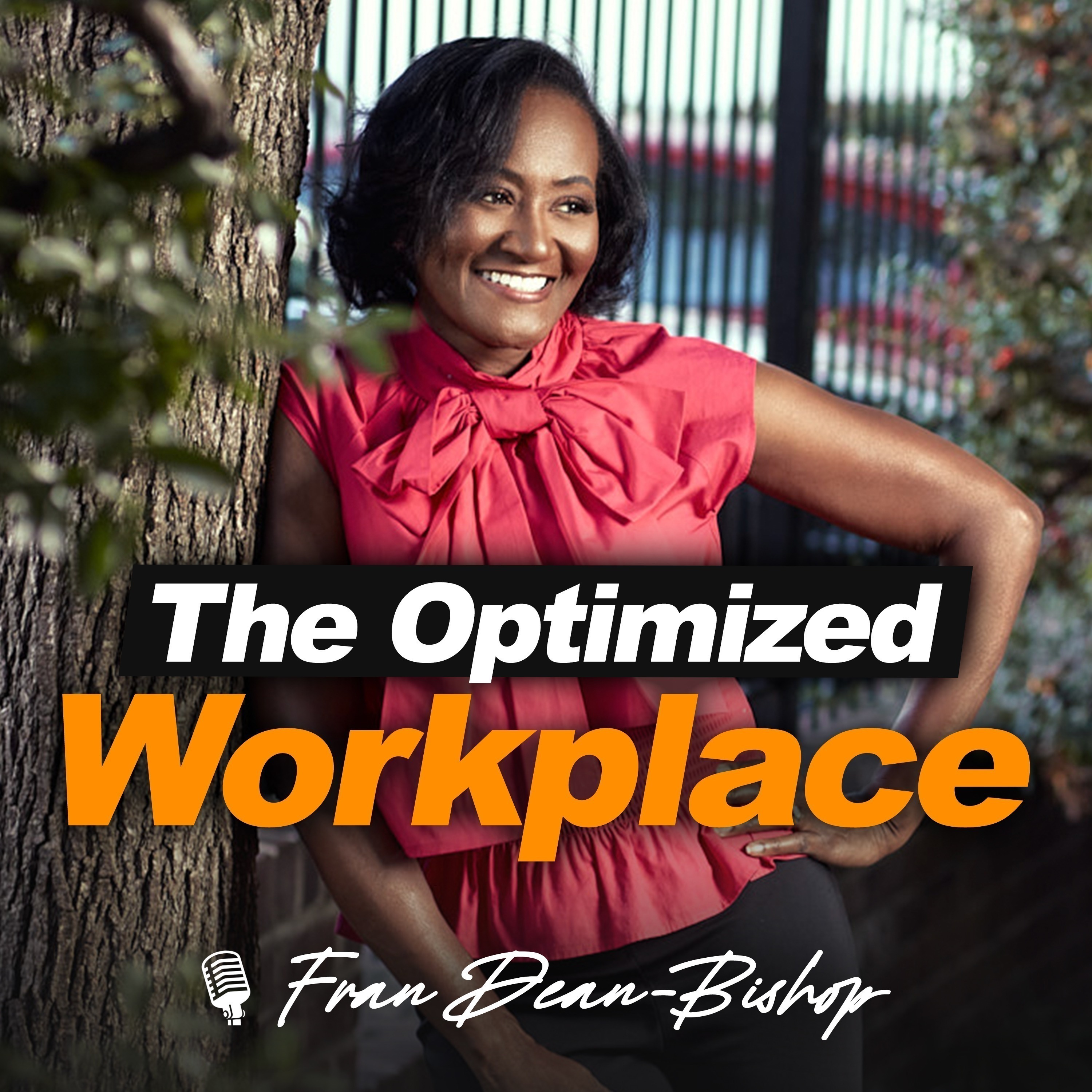
Ready to reinvent your organization and create a workplace of the future? Learn more at: theoptimizedworkplace.co. Welcome to the Optimized Workplace! My name is Fran Dean-Bishop, and I'm the founder and CEO of Aerobodies. Join me each week as I welcome innovators, A-listers, and trailblazers who’ll share their individual experiences with creating an optimized workplace. We'll take on various topics, including employee engagement, talent management, organizational culture, health management, sustainability, work-life balance… and more! This podcast will inspire you to find new and unique ways of helping your organization thrive while providing an exceptional experience for your employees and nourishing their well-being. Let's create a workplace of the future together!
What if AI could improve employee health, prevent burnout, and reduce stress all at once? Sounds too good to be true, right? But it’s actually happening now!
A lot of people worry that AI is coming for their jobs, but there’s another side to the story. More and more, AI is showing up as a powerful ally in supporting employee well-being.
In this week’s episode of The Optimized Workplace, Mark Mulray, CEO of THRIVEbyAI, reveals how artificial intelligence (AI) is changing corporate wellness programs.
Tune in to discover:
→ How AI creates tailored wellness experiences
→ The truth behind AI and job loss
→ Cybersecurity realities of AI-based tools
→ How to start integrating AI for employee well-being
…and more!
Are you ready to explore how AI can support the well-being of your team?
Let’s dive in!
Key Takeaways:
Introduction (00:00)
AI’s current role in corporate well-being (01:06)
Most significant innovations on AI (04:08)
AI applications in mental health (07:25)
How to start integrating AI for employee well-being (09:14)
Security concerns in AI-based wellness solutions (12:00)
Overcoming resistance to AI in the workplace (14:02)
Is AI replacing humans? (17:02)
Mark’s self-care routine (20:16)
The future of AI in health management (21:33)
Final thoughts (23:27)
Additional Resources:
Connect with Fran on LinkedIn: Connect with Fran
Follow our LinkedIn page: Aerobodies
Learn more about WellTeamCulture here: Create a cohesive-healthy work culture
Visit our website here: Aerobodies
–
Follow THRIVEbyAI on LinkedIn: THRIVEbyAI
Connect with Mark via email: mark@thrivebyai.com
Visit THRIVEbyAI for more information: THRIVEbyAI | Homepage
–
The Optimized Workplace is a podcast with the goal of providing new and unique ways for you to help your organization thrive while providing an exceptional experience for your employees and nourishing their well-being.
–
Ready to optimize your workplace and create a culture of well-being for your team?
👉 Book a complimentary 30-minute call with Fran: Optimize My Workplace
Be sure to follow us so you never miss an episode!
Create operational excellence & a better workplace in 3 simple steps

Step 1
Schedule a call with a health, wellness and process improvement specialist.

Step 2
We’ll work with you to uncover your core challenges and create a plan to overcome them.

Step 3
Increase employee retention, solve performance issues and make your data work for you instead of against you.
Let’s work together to identify your business’s pain points and develop a customized solution.
“Aerobodies careful attention to our requirements and tailoring to our goals and mission of the Agency was outstanding. I highly recommend them.”
– John, Deputy Administrator – Washington, D.C.
How Healthy Is Your Workplace Culture?
SEE HOW YOU STACK UP